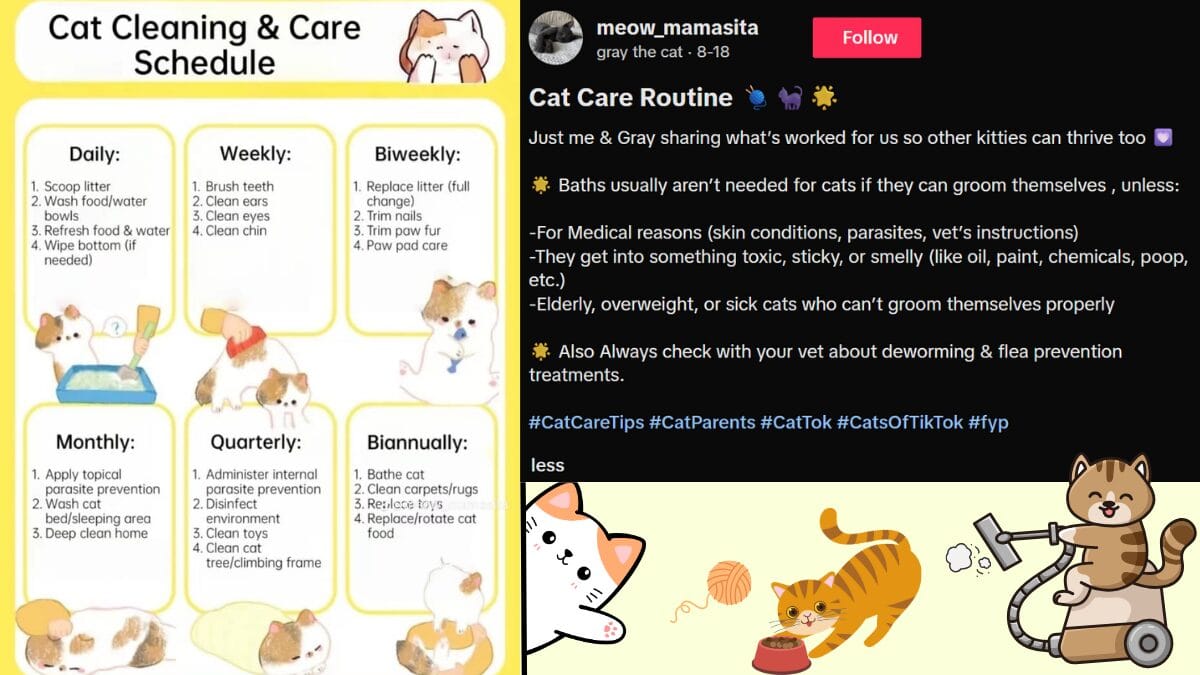

Credit: @meow_mamasita
Caring for a cat goes beyond providing food and cuddles—it requires a structured routine that ensures your feline’s hygiene, health, and comfort are consistently maintained. A well-rounded cat care routine can be divided into daily, biweekly, monthly, quarterly, and even biannual practices. By following a systematic approach, you not only keep your cat healthy but also create a cleaner, safer living environment for yourself.
Daily Cat Care Routine
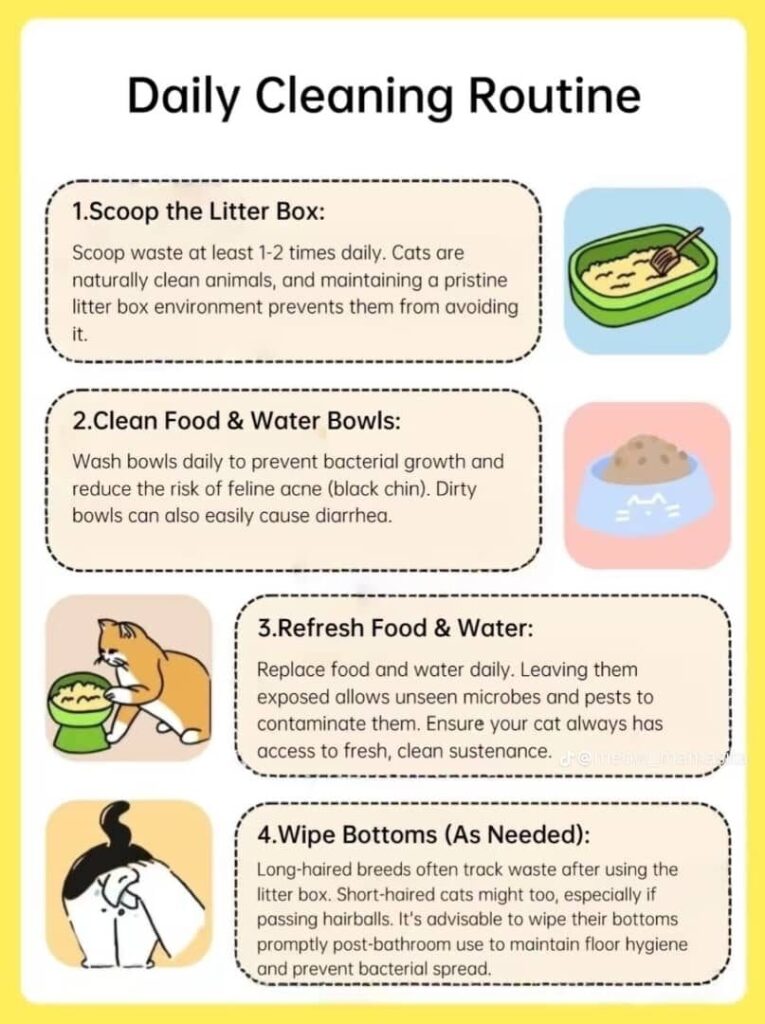
Taking care of your cat’s hygiene might feel like a small routine, but it makes a world of difference for their health and comfort. Start with the litter box—scooping waste at least once or twice a day keeps the space clean and inviting, since cats are naturally very particular about their environment. A dirty litter box can easily cause them to avoid it, leading to accidents around the house. Just as important are their food and water bowls, which should be washed daily to prevent the buildup of bacteria. Many cat parents don’t realize that dirty bowls can cause feline acne, often seen as little black spots on their chin, or even upset stomachs like diarrhea. Along with clean bowls, make sure food and water are refreshed every single day. Leaving them out too long allows unseen microbes, dust, or even pests to contaminate them—cats deserve the same fresh quality we expect in our own meals. And for those with fluffy companions, particularly long-haired breeds, there’s one more thing to keep in mind: sometimes after using the litter box, they might track a little mess along with them. Even short-haired cats aren’t entirely safe from this, especially if they’re passing a hairball. Giving their bottoms a quick wipe when needed keeps your floors clean and reduces the chance of bacteria spreading. These little acts of care may seem simple, but they go a long way in keeping your cat happy, healthy, and comfortable every day.
Biweekly Cat Care Routine
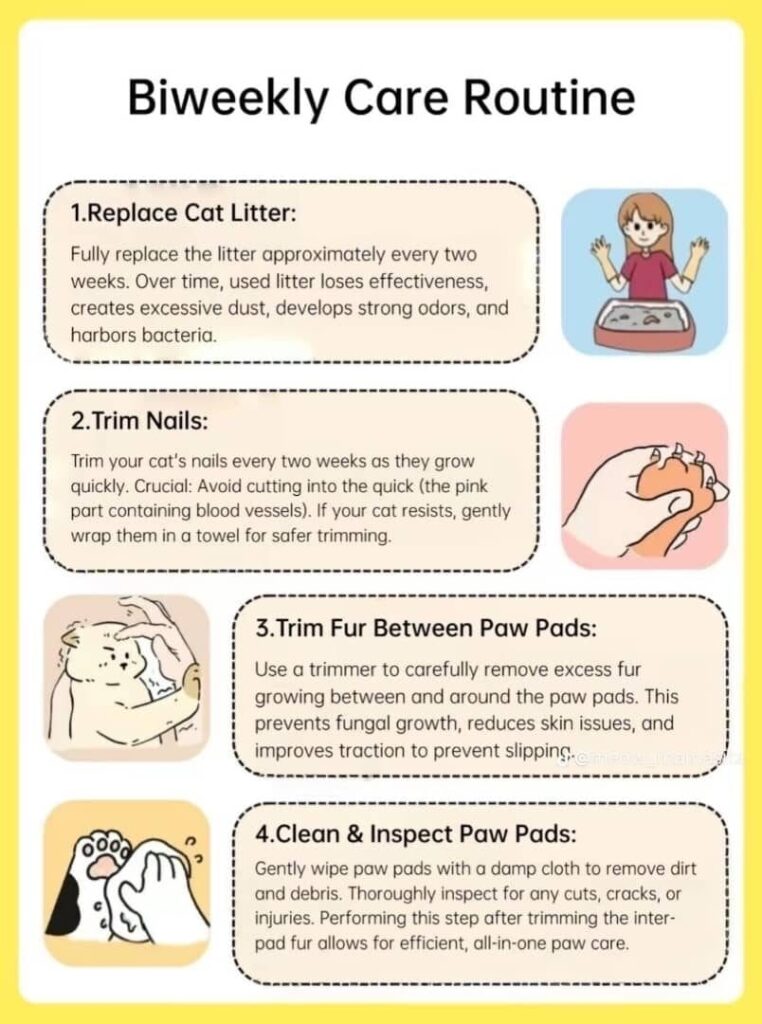
Every two weeks, it’s important to refresh certain parts of your cat’s care routine to keep them healthy and comfortable. Start by fully replacing the cat litter. Even if you scoop daily, over time the litter loses its effectiveness, creating dust, odors, and becoming a breeding ground for bacteria. A complete change keeps the environment fresh and encourages your cat to use the box consistently. Another vital step is trimming your cat’s nails. Since they grow fairly quickly, leaving them untrimmed can lead to painful snags, scratches on furniture, or even injuries to themselves and you. Always be mindful of the quick—the sensitive pink area inside the nail that contains blood vessels. If your cat is fidgety, wrapping them gently in a towel can make the process safer and less stressful.
In addition to nails, pay attention to the fur that grows between their paw pads. This little detail is often overlooked, but excess fur can trap dirt and moisture, leading to fungal problems or skin irritation, and it may even cause your cat to slip on smooth floors. Carefully trimming this fur not only improves hygiene but also gives them better traction when walking or running. Once the fur is neat, gently clean the paw pads with a damp cloth to remove any hidden debris, while also checking for cuts, cracks, or small injuries. This biweekly paw care routine ensures your cat stays comfortable, healthy, and confident in their every step.
Monthly Cat Care Routine
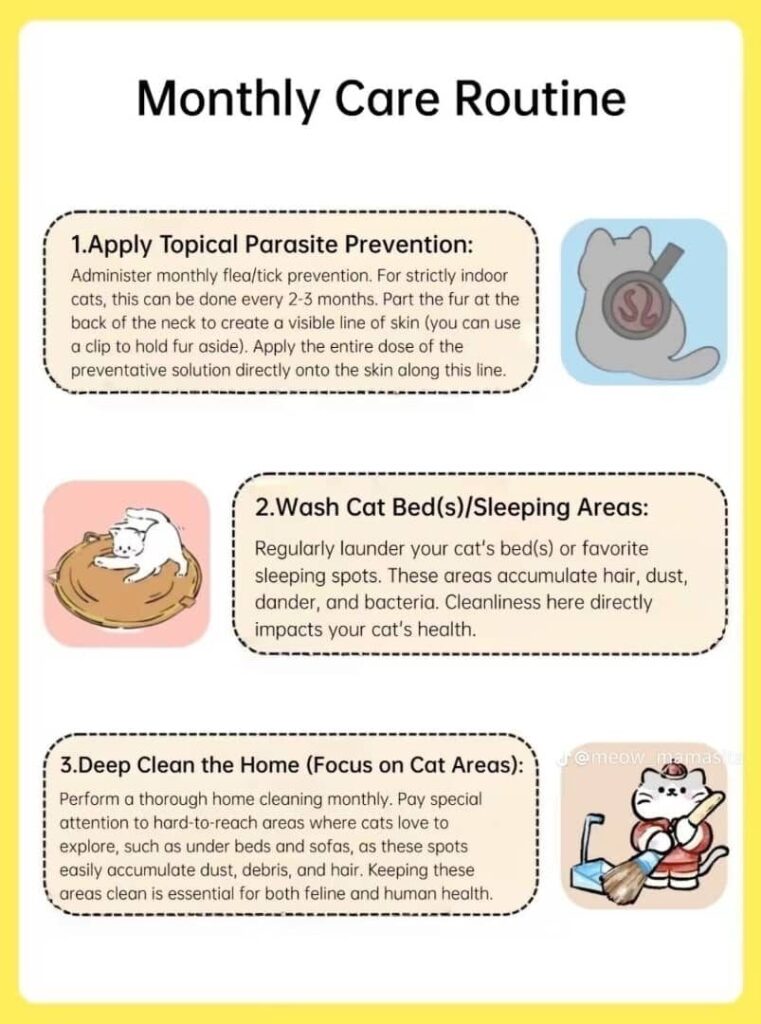
Caring for a cat goes beyond food and playtime—it’s also about creating a clean, safe environment that protects them from hidden health risks. One of the most important steps is applying topical parasite prevention. Fleas and ticks aren’t just outdoor problems; they can still make their way inside, clinging to clothes, shoes, or even other pets. A monthly treatment is ideal, but for cats who never step outside, every two to three months is usually enough. To apply it correctly, part the fur at the back of the neck until you can see the skin clearly (some people find it easier to use a clip to hold the fur aside), then apply the entire dose directly onto the exposed skin. This ensures the medication works effectively without being licked off during grooming.
Equally important is keeping your cat’s favorite resting places fresh and clean. Their beds and cozy corners naturally gather fur, dander, dust, and even bacteria over time. Regularly laundering these spaces not only keeps them smelling fresh but also supports your cat’s overall health, especially for sensitive cats who may develop skin or respiratory issues. Beyond their personal spaces, it’s a good habit to deep clean your home, focusing especially on the areas cats love most—under sofas, behind shelves, or beneath beds. These hidden spots are magnets for dust and hair, which can affect both your cat’s well-being and your own. A monthly thorough cleaning keeps the environment healthy, reduces allergens, and ensures your home feels just as comfortable for you as it does for your furry friend.
Quarterly Cat Care Routine
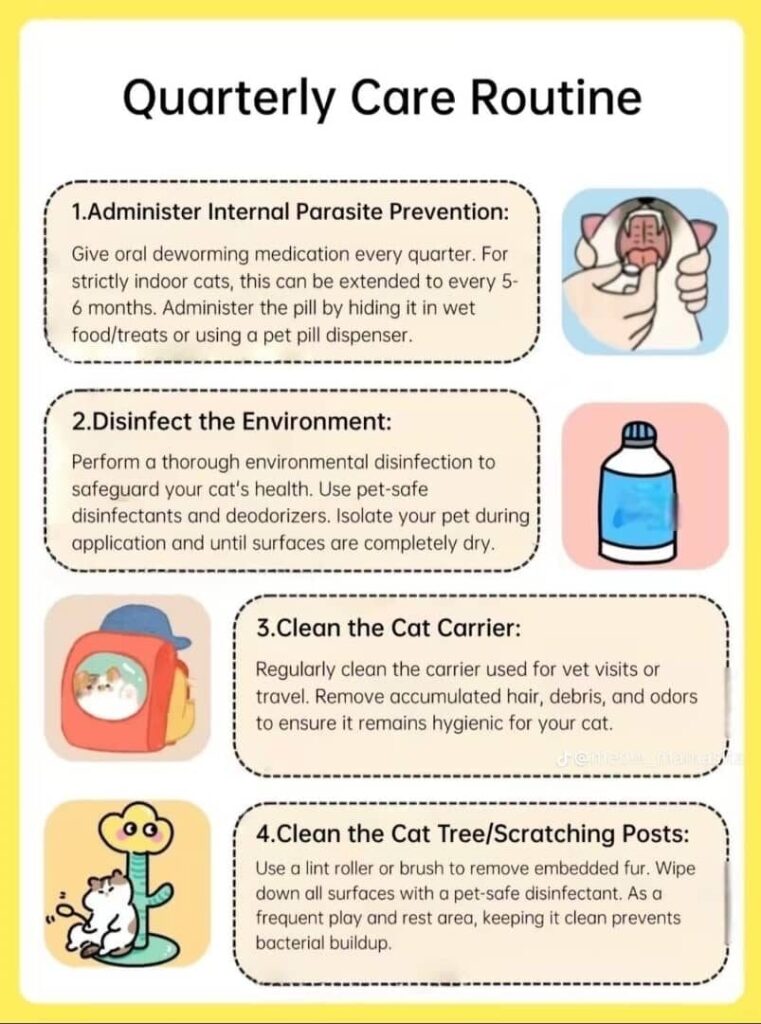
Every three months, a few bigger tasks help round out your cat’s care routine and create a healthier, more comfortable living space. One of the most important is internal parasite prevention. Even indoor cats can be exposed to parasites, so administering oral deworming medication quarterly is highly recommended. For strictly indoor cats, this can sometimes be stretched to every 5–6 months, but consistency is key. To make it easier, you can hide the pill in a bit of wet food or a favorite treat—or use a pill dispenser for a fuss-free experience.
This is also the perfect time to give your home an extra-deep clean. Go beyond your usual cleaning by using pet-safe disinfectants and deodorizers on the areas your cat spends the most time in. Always keep your cat away during application and wait until everything is dry before letting them roam freely again.
Another often-overlooked step is cleaning the cat carrier. Whether it’s for vet visits or travel, the carrier can quickly gather fur, debris, and lingering odors. Giving it a thorough clean ensures it stays fresh and stress-free for your cat when they need to use it. Lastly, don’t forget about their cat tree and scratching posts. These spots are a mix of fun and relaxation, but they can easily trap fur, dust, and bacteria. A lint roller or brush can handle the fur, while a pet-safe disinfectant keeps surfaces hygienic. Maintaining these spaces every quarter not only improves cleanliness but also prolongs the life of your cat’s favorite hangouts.
Biannual Cat Care Routine
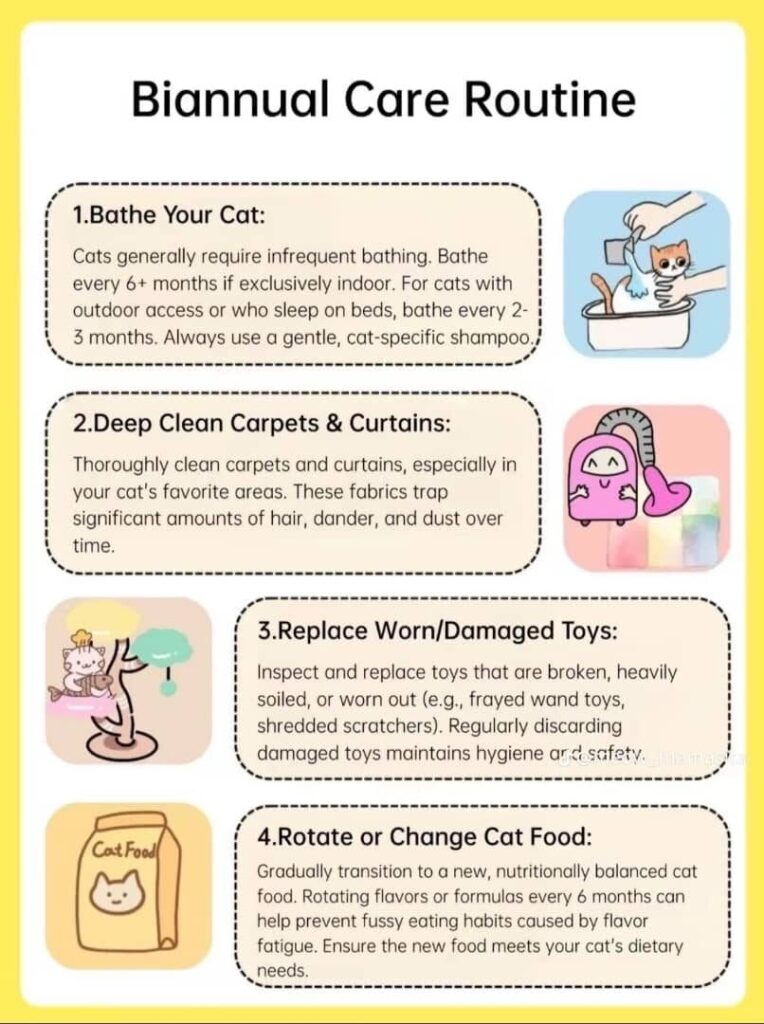
Every six months, it’s worth dedicating a little extra time to your cat’s long-term comfort and well-being. While cats are generally self-cleaning, a bath every six months (or every 2–3 months for outdoor cats or those who love curling up on your bed) can help keep their coat fresh and free from buildup. Always use a cat-safe, gentle shampoo and make sure the water is warm but not hot to keep the experience stress-free.
Beyond grooming, your cat’s environment deserves attention too. Carpets and curtains act like magnets for fur, dander, and dust. Giving them a deep clean twice a year makes your home healthier for both you and your pet, especially in areas where your cat spends most of its time lounging or playing.
This is also the perfect time to evaluate your cat’s toys. Worn-out or frayed toys can harbor bacteria and even pose safety risks. Replacing them not only keeps playtime safe but also sparks new excitement for your cat. Fresh toys mean fresh stimulation, which is key to avoiding boredom.
Lastly, consider rotating or changing your cat’s diet. Just like humans, cats can get “flavor fatigue” if they eat the same thing every day. Transitioning to a new, nutritionally balanced formula every six months can keep them engaged at mealtimes while ensuring they continue to get the nutrients they need. Always make gradual changes to avoid upsetting their stomach, and check that the new food supports their age, weight, and health requirements.
Conclusion
A well-planned cat care routine is more than just a checklist—it’s a commitment to your feline’s health, comfort, and happiness. By dividing tasks into daily, biweekly, monthly, quarterly, and biannual schedules, you create a consistent system that prevents illnesses, reduces stress for your cat, and keeps your home cleaner. Small, regular efforts like cleaning the litter box, trimming nails, and providing parasite prevention can make a huge difference in your pet’s overall wellbeing. Remember, a happy cat means a happier home, and investing in your cat’s care today ensures they remain your loyal, loving companion for years to come.
#CatCareRoutine #FelineHealth #PetLifestyle #HappyCats #CatLovers #CatParentTips #PetWellbeing #CatCareGuide #HealthyCats #MeowMamasita